
Rhythm and aural training for young pianists
Rhythm and aural training work best when students make the music before they see it: feel the beat, sing the sound, and only then meet the symbol. This guide shows how I teach rhythm and ear training to young pianists, and the activities I use in every lesson.
It's for teachers whose students can play the notes but struggle to keep a steady beat, clap a rhythm or hear what they're about to play.
What aural training is, and what it isn't
An aural approach can look like teaching students to play by ear. It isn't. Playing by ear is really playing by recall: hearing a piece and reproducing it from memory. Developing the ear is a completely different skill. It's the study of musical sound, so students play with real knowledge of how music works.
Our students already know more than we think. Before birth, babies feel the vibrations of their mother's voice, and the strongest of those are the tonic, third and fifth: Do, Mi and So in moveable solfa. We use the same tones when we sing to babies. So we start with what students already know, and build from there:
- Singing. It resonates the body the way the mother's voice did, and it's the strongest way to develop musical understanding.
- Inner hearing. Students learn they can hear music in their mind and know what it is.
- Acoustic sound. Real instruments and real voices, so students resonate with the overtones.
When students understand the sound first, the connection to the instrument and to notation feels seamless.
Read more: Playing by ear is not the same as developing the ear and Reading first or aural skills first?
Rhythm starts in the body
Many rhythm problems start with teaching straight from the book: we show students note values and ask them to produce sounds they see, instead of introducing the sounds first and then showing the symbol for what they already hear.
So I never begin with note values. Rhythm starts away from the piano, usually sitting on the floor, where we discover pulse, the “music heartbeats”:
- Tap your chest with your palms in time to singing and chanting.
- Move the heartbeats around: to your lap, your head, your nose.
- Move them to drums, boomwhackers or any other noise maker you can find.
- Move them into your mind, which is where the beat eventually needs to live.
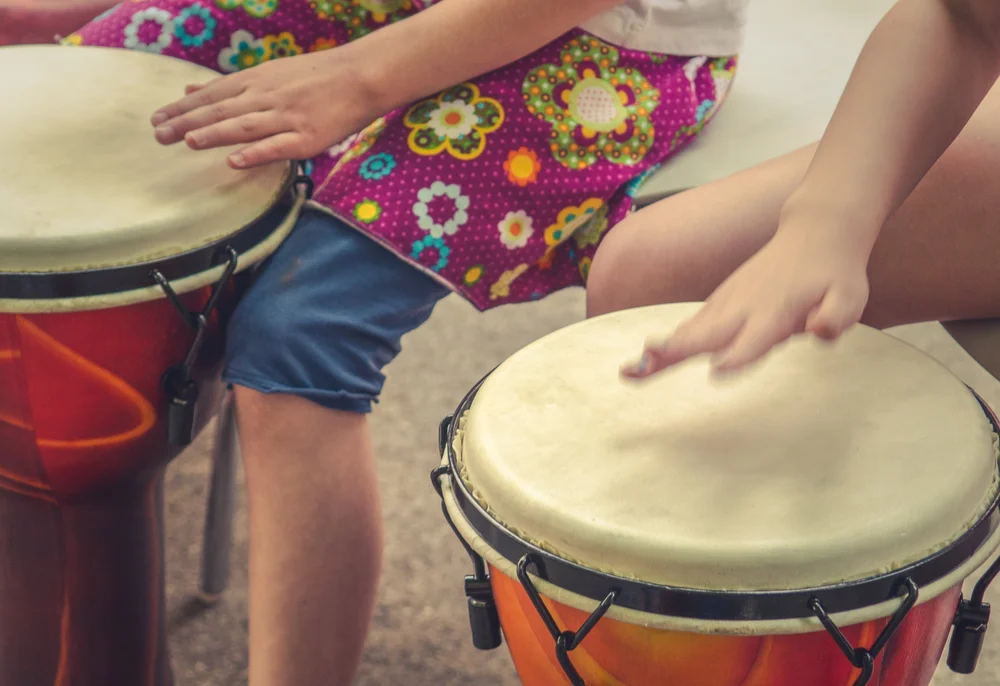
In time we drop the word “heartbeat” and simply call them beats.
From beat to rhythm
Only after all of that do I build rhythm on top. We keep a steady pulse on laps or drums and say or sing the rhythm over it. We never cheat on the pulse: it stays steady through every long and short note.
This is when powerful learning happens. When young students speak or sing rhythms while keeping a steady pulse, their musicianship takes massive leaps forward.
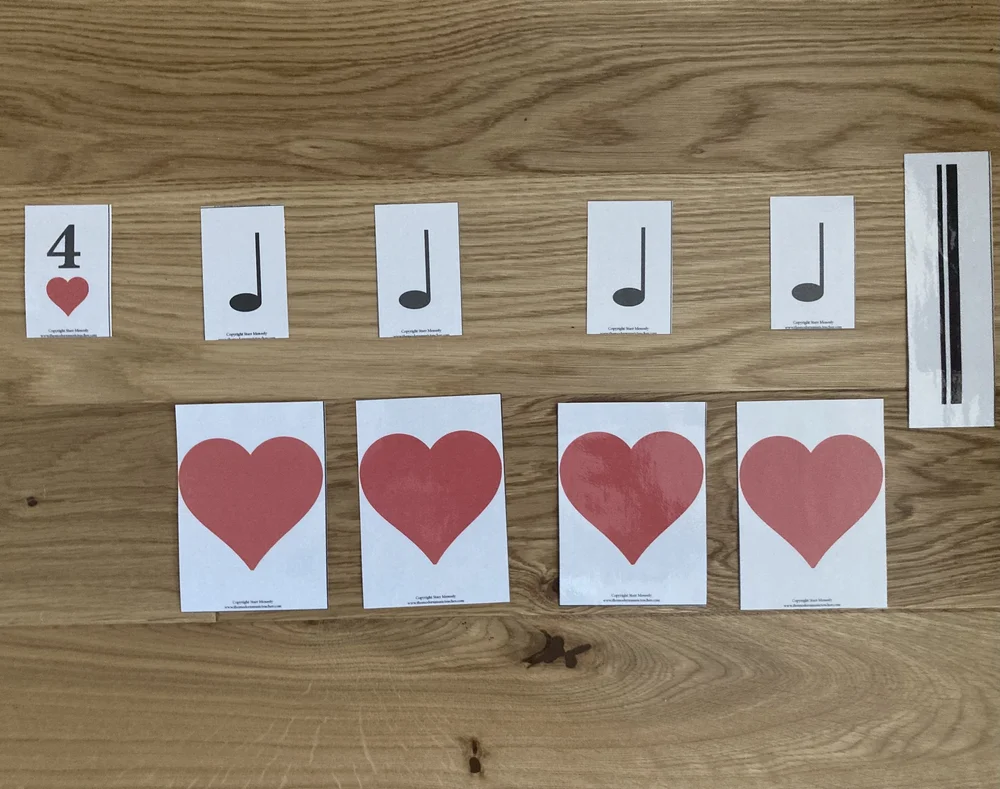
Then the symbols arrive. Pulse is shown visually with heart cards, one heart per beat. Rhythm cards such as crotchets are laid above the hearts, so students see exactly how each rhythm sits on the beat they can already feel.
Read more: Why students don't clap rhythm
Hearing pitch
Pitch work starts with the voice. Students sing So and Mi first, the notes they already know, and new notes are added one at a time, always sung and signed before they're played. Because we use moveable Do, students hear how the notes relate to each other in every key.
The goal is inner hearing: hearing the music in your mind before you play it. Singing with students helps them hear the piano as it really is, like a choir of voices, lines and harmonies, not just a tune with an accompaniment.
Canons take this further. I think of them as baby fugues: students learn to hear and sing in more than one voice. In the Rose Red video, a student sings and plays the old English folk song in canon, with a drum keeping the pulse.
Read more: Singing and playing in canon, It's not just about singing and How to teach piano with solfa
Activities to use in every lesson
- Heartbeats on the move. Keep the beat on chests, laps, heads, then drums, then silently in the mind.
- Say it, then play it. Keep a steady pulse while you speak or sing a rhythm, before it goes to the keys.
- Heart cards. Lay out four hearts, then place rhythm cards above them.
- Sing and sign. Sing a short solfa pattern with hand signs; students echo it, then find it on the keys.
- Sing, then play. Every new piece is sung first, away from the piano.
- Canons. Sing one voice while playing the other, or sing against the teacher.
- Drum along. Add a drum under a piece to steady the pulse and add a new sound colour.
See these in real lessons: 24 teaching demonstrations
Questions teachers ask
My student can't clap a rhythm. What should I do?Go back to the pulse. Away from the piano, establish the beat in the body first, then say or sing the rhythm over a steady pulse. Clapping note values in isolation rarely fixes it.
Should I use counting or rhythm names?Whatever you use, the beat comes first. Students need to feel a steady pulse before any system of counting makes sense.
Isn't an aural approach just playing by ear?No. Playing by ear is really playing by recall. Developing the ear means understanding how music works, which makes reading, harmony and expressive playing easier too.
I don't have time for extra aural work.It doesn't need extra time. Singing a piece before playing it, or keeping the beat while saying a rhythm, takes a minute and makes the rest of the lesson faster.